

Nigeria sharpens security, economic focus; church leaders back lawful protection, state police
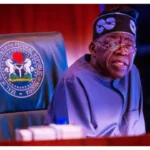
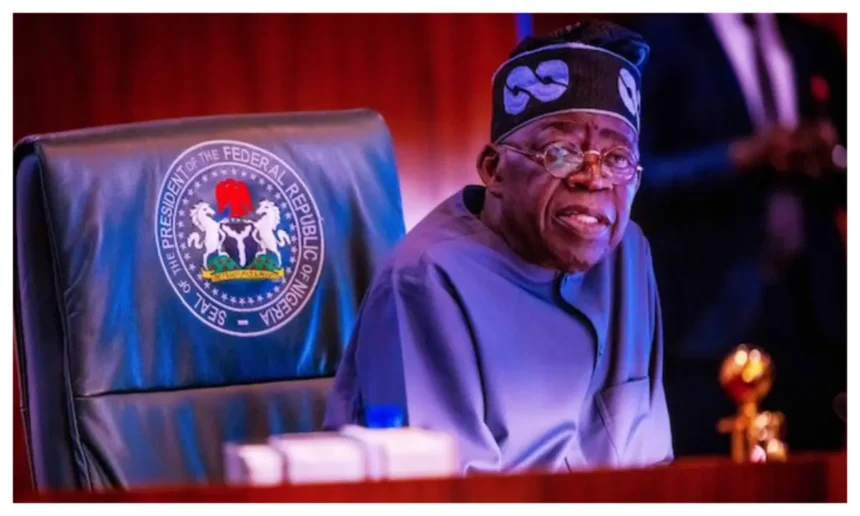
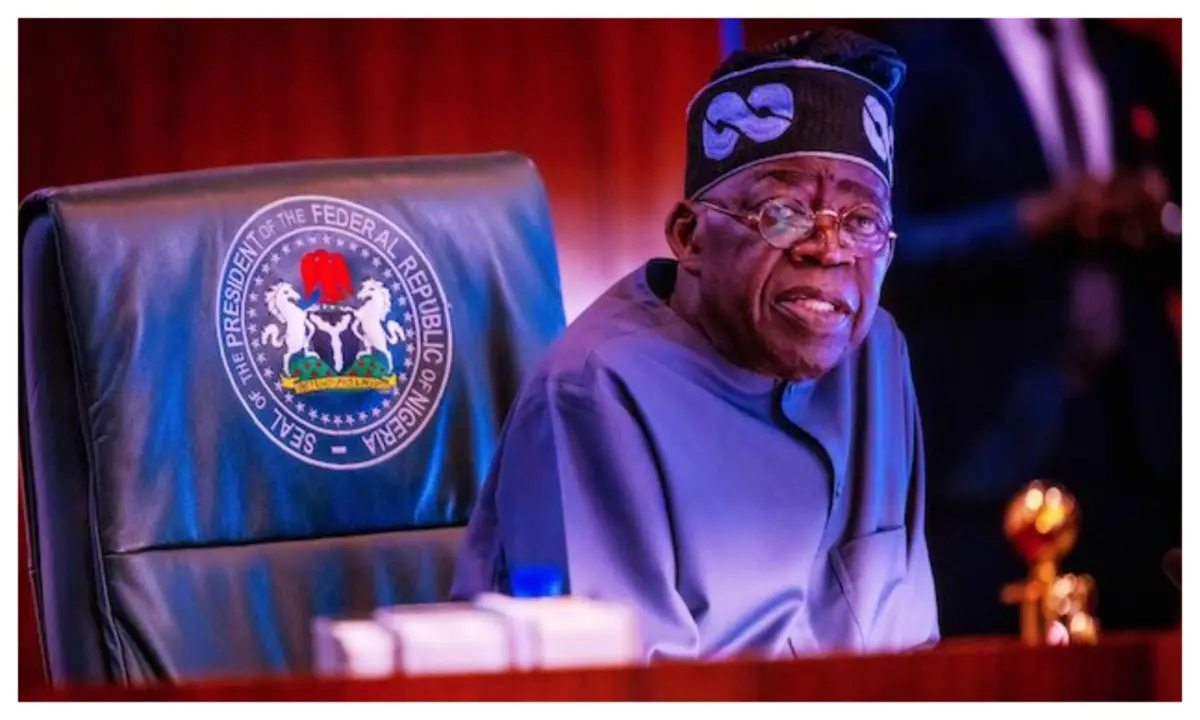
Nigeria’s drive to stabilise security and unlock economic growth returned to national discourse on Sunday, as President Bola Tinubu reiterated that peacebuilding, expanded opportunities, and structural security reforms remain the pillars of his government’s mandate.
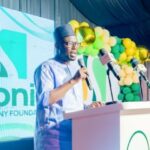
The President’s position was conveyed in Lokoja during a memorial event for the late Prince Abubakar Audu, a former governor of Kogi State, delivered on his behalf by the Minister of Information and National Orientation, Mohammed Idris.
Idris, in a statement issued through his media aide Rabiu Ibrahim, said the administration acknowledges the severity of current challenges, adding, “We are under no illusions about the recent setbacks and security challenges that have tested our nation’s resolve.”
He assured attendees that the government is moving beyond rhetoric, declaring:
“Let me be unequivocal: the security and welfare of every Nigerian remain the sacred priority of my government. We have therefore taken decisive action.”
Addressing the newly declared State of Emergency on national security, Idris described it as an aggressive reset for intelligence and policing strategy, stating:
“The recent Declaration of a State of Emergency on national security underscores the gravity with which we view this challenge. This is not a mere proclamation; it is a declaration of war against all forms of insecurity.
“As part of this, we have immediately begun the process of expanding the capacity of our armed forces and security agencies in numbers, in advanced weaponry, and in intelligence capabilities.
“We will hunt the enemies of our state wherever they may be and restore the peace that is the rightful inheritance of every Nigerian.”
He explained that the government is also accelerating constitutional policing reforms, including state police, saying, “to secure our people permanently, we must reform the very architecture of our security. This is why my administration is courageously championing the establishment of a State Police Force.
“We believe that a more localised, community-sensitive security structure is vital to complement the valiant efforts of our national forces. It will also boost employment in the grassroots.
“This is a bold, necessary constitutional step, one that requires our collective will, and we are committed to seeing it through.”
Remembering Audu’s national significance, Tinubu described the late governor as a cornerstone of democratic progress.
“We are gathered to honour a giant- a man whose name is irrevocably woven into the very fabric of our democratic journey.
“Prince Abubakar Audu was not just a politician; he was a pathfinder. As the first democratically elected Governor of Kogi State, first in 1992 and again as a pioneer in 1999, Prince Audu carved out a vision for Kogi State and helped lay the foundation for our nation’s enduring democracy,” he added.
The President also recounted their political camaraderie, saying, “He was my formidable ally, a brother in the struggle, and one of the founding fathers who, with courage and conviction, laid the foundations upon which our democratic ideals now stand.
“His legacy is not a relic of the past; it is a living, breathing template of bold leadership and transformative governance. It is a template this administration is committed to honouring, not just in words, but in concrete action.”
Tinubu further spotlighted economic interventions aimed at transforming historically sensitive sectors, including livestock production.
“We are launching a comprehensive initiative to modernise the livestock industry.
“This includes the creation of large-scale ranching schemes, improved animal husbandry, and the integration of the livestock value chain into our national economy. Our goal is to transform this critical sector from a source of tension into a bastion of prosperity.
“We are building the arteries that will connect our markets, power our industries, and unite our people.
“Your Excellency and the good people of Kogi State, the legacy of development Prince Audu began in Kogi is a model we are determined to replicate and scale across the nation.”
The security assertions came as fresh school abductions rattled parts of northern Nigeria. Armed men recently seized staff and pupils of St. Mary’s Catholic Primary and Secondary Schools in Papiri, Niger State, days after 25 students were kidnapped in Maga, Kebbi State. Rising attacks also forced Tinubu to cancel diplomatic trips to South Africa and Angola to supervise national security coordination, while state governments implemented temporary school closures in response to persistent abductions.
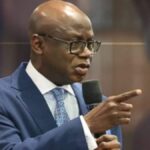
In a separate but thematically aligned national security conversation, Rev. Felix Omobude, former President of the Pentecostal Fellowship of Nigeria, said Nigeria’s worsening security outlook makes protective planning unavoidable, but warned against self-help militarisation by civilians.
Speaking in Benin, Edo State, during a press interaction, he said, “there is nothing wrong with churches and Christians organising protection through appropriate channels during services and activities.
“It will be irresponsible for a leader at certain levels, for example, to call for the bearing of arms or to call for violence. Violence will give birth to more violence; we don’t have another nation.
“I don’t see anything wrong with seeking external help.”
Omobude reflected on long-term warnings that once sounded exaggerated but are now a reality, adding that, “our sovereignty has already been violated by insurgents who came from other countries and have taken over our territories. It is as if the military itself has been infiltrated.”
Drawing from historical precedent, he noted the country once operated localised policing models, and maintained that constitutional reforms are overdue. He said, “as President of PFN for eight years, we advocated the formation of state police. I was happy to hear recently that the President has ordered that it be done. The centralisation of the policing system in this country is anti-development. Society has gone beyond that.”
He further expanded on his support for decentralised policing, saying:
“When I was growing up, we had local government authority police. They had local government authority police. They had their duties — tax collection, environmental issues, and all the rest. So I don’t see any reason why we should not encourage state policing.”
He dismissed arguments that external support would weaken sovereignty, stating:
“I heard that the Americans want to come and help us. Some people say it violates our sovereignty. I don’t think that is correct.
“Our sovereignty has already been violated by insurgents who came from other countries and have taken over our country.
“So I don’t see anything wrong with seeking external help.”
He added that insurgents have disrupted communities and taken over territories, particularly in northern Nigeria, imposing levies, controlling settlements, and perpetuating attacks despite military offensives that have killed some of the criminals. According to him, national security conversations should now acknowledge infiltration risks, cross-border insurgency patterns, and the widening employment benefits state police systems could deliver if constitutional will is collectively mobilised.
The church leader concluded that Nigeria must reject violent self-defence by civilians, while embracing lawful protection systems and external collaboration as part of a broader national counterterror strategy.