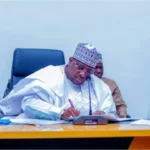

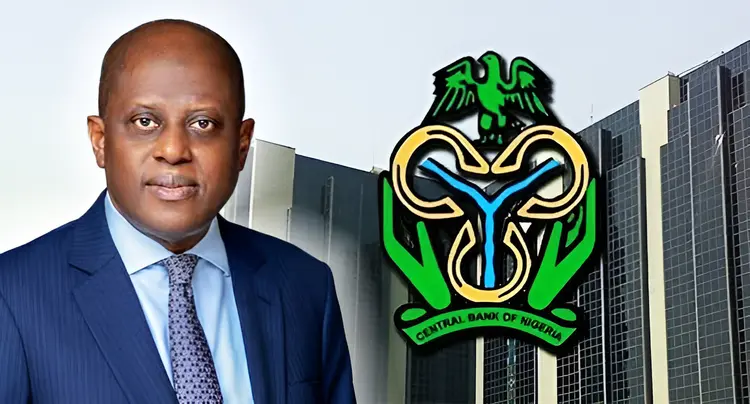

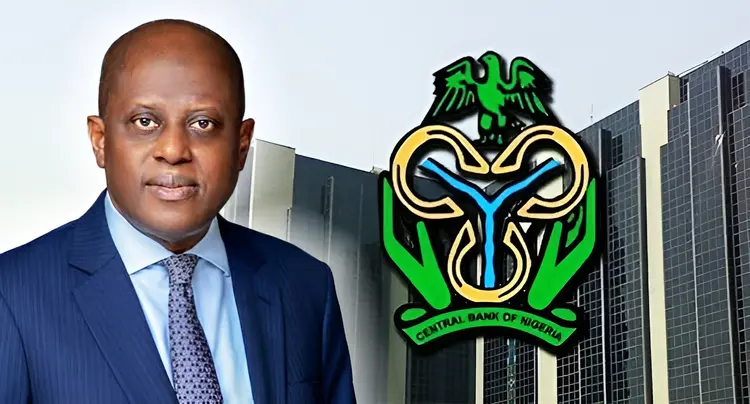
The Central Bank of Nigeria (CBN) on Thursday delivered an optimistic outlook for the country’s economy in the second half of 2025 during a statutory briefing to the Senate Committee on Banking, Insurance, and Other Financial Institutions.
The committee, chaired by Senator Adetokunbo Abiru (Lagos East), commended the apex bank for what it described as a clear upward trajectory since the beginning of the year but urged its leadership to sustain the momentum as the nation moves towards 2026.
CBN Governor Olayemi Cardoso reported steady improvements in output, noting that real GDP grew by 3.98 per cent in the third quarter of 2025. This, he said, was higher than the 3.86 per cent recorded in the same quarter of 2024, although marginally lower than the figure posted in the preceding quarter. He identified crop production, ICT, real estate, and the financial and insurance industries as the major drivers of what he called “broad-based and resilient growth.”
Cardoso also highlighted a significant moderation in inflation. Headline inflation declined for seven consecutive months, reaching 16.05 per cent in October 2025—down sharply from a peak of 34.6 per cent in November 2024 and the lowest level in three years. Food inflation similarly eased to 13.12 per cent in October, compared with 21.87 per cent in August.
“This steady disinflation is restoring real purchasing power for households and businesses, and we remain fully committed to pushing inflation down to single-digit levels over the medium term,” he said.
The governor described the foreign exchange market as the clearest indicator of renewed economic confidence. He noted that the gap between official and parallel market rates had narrowed to under 2 per cent, compared with more than 60 per cent a year earlier. The naira has also strengthened, with the official exchange rate improving to ₦1,442.92 to the US dollar as of 26 November, from ₦1,551.08 recorded in the first half of the year.
Cardoso added that external reserves had risen to US$46.7 billion—the highest level in nearly seven years—providing about 10.3 months of import cover. Diaspora remittances, he said, had surged by 66.7 per cent to roughly US$600 million monthly, while the long-standing US$7 billion verified FX backlog had now been cleared.
Looking ahead, the CBN governor reiterated that Nigeria’s 2026 outlook remained highly positive, citing the country’s status as one of Africa’s most advanced digital payments markets, powered by a thriving fintech ecosystem that has produced eight of the continent’s nine unicorns.
Senator Abiru, in his remarks, praised the bank’s policy direction, noting that global rating agencies such as Fitch and S&P had responded favourably to Nigeria’s improved macroeconomic stability and strengthened investor confidence.