

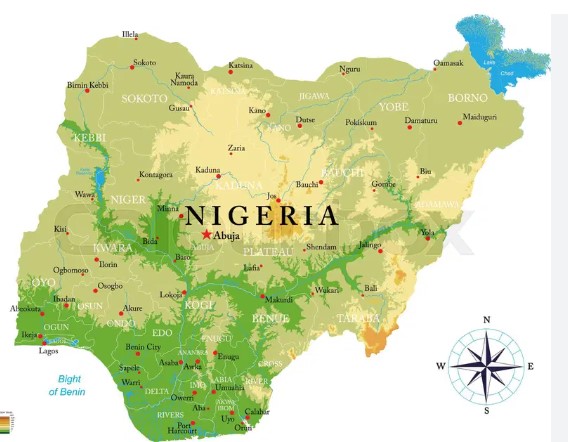
The United States House Appropriations Committee has renewed its warning about rising religious persecution worldwide, placing Nigeria at the centre of its concerns.
In a statement shared on its official X handle, the committee vowed that the U.S. “will not look away as innocent lives are stolen,” emphasising that safeguarding religious freedom remains a cornerstone of its National Security and Related Programs (NSRP) bill.
“Directed by @POTUS, Appropriators led an on-the-ground mission to inform a report on Christian persecution in Nigeria and guide policy recommendations,” the committee noted, adding that “religious freedom and atrocity response are central to our NSRP bill.”
This renewed stance follows the recent fact-finding mission carried out in Nigeria by a delegation of U.S. appropriators, acting on the directive of President Donald Trump. The visit, aimed at evaluating the scale of religious violence, is expected to shape future congressional responses.
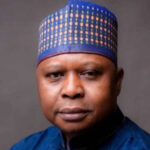
National Security Adviser Nuhu Ribadu confirmed hosting the team, describing the engagement as part of continuing security cooperation between Abuja and Washington. He said conversations built on previous meetings in the U.S. capital, focusing on “counter-terrorism cooperation, regional stability,” and reinforcing an already “strategic security partnership.”
Rep. Riley Moore, who was part of the delegation, described the mission as “a very productive visit to Nigeria.” His team also held discussions with Tiv and Catholic leaders in Benue State, one of the country’s hardest-hit areas in terms of communal and religious attacks.
The congressional trip comes at a diplomatically sensitive moment, following Washington’s redesignation of Nigeria as a Country of Particular Concern—a decision that has stirred debate over the potential fallout, including speculation about military involvement. The Nigerian government has pushed back strongly, insisting that insecurity in the country “affects all faiths.”
Further highlighting the escalating engagement, Ribadu met U.S. Secretary of War Pete Hegseth at the Pentagon on November 20, where both sides discussed coordinated strategies to confront Nigeria’s complex security environment.
Soyinka chides Tinubu’s son
As global scrutiny intensifies, domestic concerns about security management also took centre stage. Nobel laureate Wole Soyinka, speaking at the 20th Wole Soyinka Centre for Investigative Journalism Awards, criticised what he called an extravagant misuse of state protection after witnessing “an excessively large security battalion assigned to a young individual close to the Presidency,” later revealing it was President Tinubu’s son, Seyi.
“I couldn’t believe it,” Soyinka said, recalling how he alerted Ribadu immediately. He warned that such deployments reflect misaligned priorities in a country facing kidnappings, insurgency and widespread violence. “Children must understand their place. They are not elected leaders,” he cautioned.
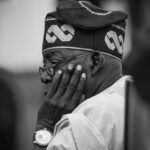
Tinubu had on November 23 ordered the immediate withdrawal of police officers assigned to provide personal protection for Very Important Persons (VIPs), directing that they be redeployed to their primary policing responsibilities nationwide.
The directive was issued during a high-level security meeting held at the Presidential Villa, Abuja, which brought together the heads of the police, army, Air Force, and the Department of State Services (DSS).
According to the presidency, the move aims to strengthen security presence nationwide, particularly in underserved and hard-to-reach communities. Under the new arrangement, VIPs requiring armed protection must now secure such services from the Nigeria Security and Civil Defence Corps (NSCDC).
The presidency noted that many areas across Nigeria, predominantly rural and remote communities, currently suffer from a critical shortage of police presence. This, it said, has made it increasingly difficult for residents to receive adequate security and rapid response in times of crisis. “With the security challenges facing the nation, President Tinubu is desirous of boosting police presence in all communities,” the statement read.
National emergency declaration
The New Daily Prime on November 26 reported that Tinubu placed Nigeria on a national security emergency footing, authorising major police and military recruitment to confront escalating violence across the country.
A statement from the State House confirmed the president’s directive for the Nigeria Police Force to hire 20,000 new officers, raising the overall approved intake to 50,000.
Tinubu also greenlit the deployment of NYSC camps as interim training centres for the recruits.
The statement said, “Today, in view of the emerging security situation, I have decided to declare a nationwide security emergency and order additional recruitment into the Armed Forces.”
Explaining the scope of the order, the president added, “the police will recruit an additional 20,000 officers, bringing the total to 50,000.”
He further approved the conversion of selected NYSC camps into training depots, despite previous plans to upgrade police training institutions nationwide.
Tinubu instructed that officers recently withdrawn from VIP protection duties should receive accelerated “debrief” training before being deployed to frontline policing roles.
“The officers being withdrawn from VIP guard duties should undergo crash training to debrief them and deliver more efficient police services when deployed to security-challenged areas of the country,” he said.
In a national address, the president said, “My fellow Nigerians, this is a national emergency, and we are responding by deploying more boots on the ground, especially in security-challenged areas. The times require all hands on deck.”
Tinubu further empowered the Department of State Services to deploy specialised forest guards to pursue terrorists and bandit groups operating deep inside Nigeria’s forests, while approving additional recruitment to support the operations.
The president also called on local authorities and religious institutions to strengthen security around schools and worship centres, warning against unprotected boarding schools in isolated locations. “States should rethink establishing boarding schools in remote areas without adequate security,” he said.
Addressing the root of farmer-herder clashes, Tinubu highlighted the government’s new livestock reforms, urging herder groups to abandon open grazing and adopt ranching.
He said, “Our administration created the Livestock Ministry to address the persistent clashes between herders and farmers. I call on all herder associations to take advantage of it, end open grazing, and surrender illegal weapons.” Reaffirming the government’s commitment, he added,
“Ranching is now the path forward for sustainable livestock farming and national harmony. The Federal Government, in collaboration with the states, will work with you… once and for all.”
Closing his message, the president appealed for public vigilance, saying, “Report suspicious activities. Cooperate with security agencies. We are in this fight together, and together we shall win.” He ended with prayers for national peace and the safety of security personnel, saying, “May God continue to bless Nigeria and keep our armed forces safe.”