
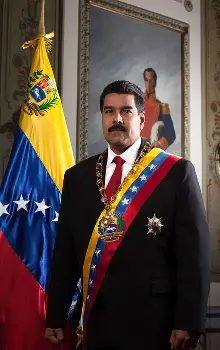

United States President Donald Trump reportedly delivered a stark ultimatum to Venezuelan leader Nicolás Maduro during a recent phone call, demanding that the embattled president relinquish power immediately.
According to sources cited by the Miami Herald, Trump offered Maduro and his family safe passage out of Venezuela if he agreed to resign without delay. Maduro, however, refused the demand, instead insisting on sweeping concessions, including global immunity from prosecution and continued control of the armed forces.
Trump confirmed to reporters on Sunday that the call had taken place but declined to characterize its outcome. “I wouldn’t say it went well or badly, it was a phone call,” he said. Neither Washington nor Caracas has provided official details of the conversation, which is believed to have occurred on November 21. The discussion was reportedly arranged with the help of Brazil, Qatar, and Turkey, underscoring the unusual nature of the direct contact between the two leaders.
The ultimatum came amid a four-month pressure campaign by the United States, which has included a significant naval deployment off Venezuela’s northern coast. Trump’s message, described as blunt, warned Maduro that he could secure safety for himself and his closest allies only by leaving power immediately. Maduro’s refusal, coupled with his counter-demands, highlighted the deep impasse between the two governments.
Reports suggest there has been no further direct communication since the call. Maduro allegedly sought a second conversation last weekend after Trump declared Venezuela’s airspace “closed in its entirety,” but the request went unanswered. The Venezuelan president later addressed thousands of supporters in Caracas, rejecting what he described as a humiliating peace imposed from abroad. “We want peace, but peace with sovereignty, equality, freedom! We do not want a slave’s peace, nor the peace of colonies!” he declared.
Despite the dramatic nature of the ultimatum, many analysts remain doubtful that the United States intends to follow through with large-scale military action. Sources familiar with Venezuelan officials told the Wall Street Journal that Maduro and his inner circle view the threats as a bluff. The skepticism reflects Maduro’s track record of surviving repeated crises since his election in 2013. He has weathered Trump’s earlier “maximum pressure” campaign, mass protests, a devastating economic collapse, a 2018 assassination attempt, and widespread belief that he lost last year’s presidential election to opposition candidate Edmundo González.
The Wall Street Journal editorial board on Sunday urged the Trump administration to intensify its efforts, arguing that removing Maduro is in the national interest of the United States.
“If Maduro refuses to leave, and Trump shrinks from acting to depose him, Trump and the credibility of the US will be the losers,” the paper wrote.
The statement reflects growing calls among some observers for Washington to escalate its strategy, even as doubts persist about the feasibility of military intervention.
Meanwhile, regional leaders are seeking alternatives to confrontation. Colombian President Gustavo Petro has offered Cartagena as a potential venue for negotiations between Maduro’s government and Venezuela’s opposition. The proposal aims to create space for dialogue that could avert further escalation and provide a path toward a peaceful resolution.
Maduro, however, continues to frame the standoff as part of a broader struggle over Venezuela’s vast oil wealth. In a letter to OPEC published by state media, he accused the United States of attempting to seize the country’s reserves, the largest in the world, through military force.
“The US seeks to appropriate Venezuela’s vast oil reserves through the lethal use of military force,” Maduro wrote, reinforcing his narrative that foreign powers are conspiring against his government.
The confrontation underscores the fragile state of Venezuelan politics and the high stakes for both sides. For Trump, the ultimatum represents a bold attempt to force change in Caracas, but one that risks exposing Washington to charges of empty threats if not backed by decisive action.
For Maduro, the refusal to step down reflects both his determination to cling to power and his reliance on framing the crisis as a defense of national sovereignty against foreign aggression.