

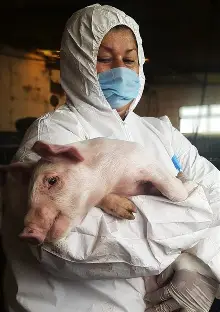

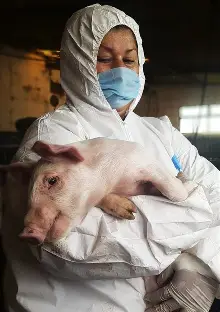
Spanish authorities have launched a large-scale operation to contain an outbreak of African swine fever (ASF) detected outside Barcelona, fearing it could threaten the country’s €8.8bn pork export industry.
The virus was identified in the municipality of Bellaterra after two wild boars were found dead last week. Officials suspect the disease may have spread after a boar consumed contaminated food brought in from outside Spain. Òscar Ordeig, Catalonia’s agriculture minister, said the origin could have been “cold meat, a sandwich or a contaminated product that arrived by road,” though this has not yet been confirmed.
A four-mile exclusion zone was established around Bellaterra following the initial cases. On Tuesday, the agriculture ministry confirmed that seven more dead boars in the same area had tested positive, bringing the total number of cases to nine.
Experts have inspected pig farms within a 20-mile radius of the outbreak but reported no signs of infection among domestic herds. The ministry said Spain remains on “high alert” and has tightened biosecurity measures across Catalonia and other regions.
To strengthen the response, 117 personnel from Spain’s military emergencies unit have been deployed to disinfect affected areas, remove animals, and monitor the situation using drones. Authorities have urged the public not to feed wild boar and to report any dead animals to emergency services.
Catalonia’s regional president, Salvador Illa, said the government had acted quickly and transparently. “We’re working in coordination with the rest of the administrations with a clear objective: to stop the outbreak, to help and protect the sector, and to overcome this emergency,” he said.
Agriculture minister Luis Planas met with pork industry representatives on Monday, assuring them that the government was using “all its mechanisms” to contain the outbreak and limit its impact on exports. Spain, the EU’s largest pork producer, exported €5.1bn worth of pig meat to other EU countries last year and €3.7bn to markets outside the bloc.
China, which accounts for 42% of Spain’s pork exports to non-EU countries, has suspended imports from Barcelona province but continues to accept products from other regions. Planas described this as “good news,” noting that the Chinese market is worth €1.1bn to Spanish producers. He added that two-thirds of Spain’s export certificates remain valid and that efforts are underway to restore the remaining approvals.
ASF, long endemic in Africa, poses no risk to humans but is often fatal to pigs. The virus devastated China’s pig population in 2018, with losses estimated at up to 100 million animals. It was later confirmed in Germany in 2021. ASF spreads through direct contact with infected animals, ticks, and contaminated meat products, which can carry the virus for months or even years if frozen.
The Spanish government has pledged to maintain strict vigilance as it works to protect the country’s vital pork industry from further disruption.