
By Eniola Amadu & Ismaeel Akeem
Following the global pandemic of 2019, a new wave of military takeovers has spread across Africa, taking root wherever political instability and security failures created openings. Five years on, the continent has witnessed a steady return of military rule, with at least one coup recorded every year since 2020—except in 2024.
Across the West African Sahel, Mali set the pace with a coup in May 2021, followed by another in August 2021 that toppled the interim government and paved the way for full military control. Mali’s actions were soon mirrored by its neighbours, Burkina Faso and Niger.
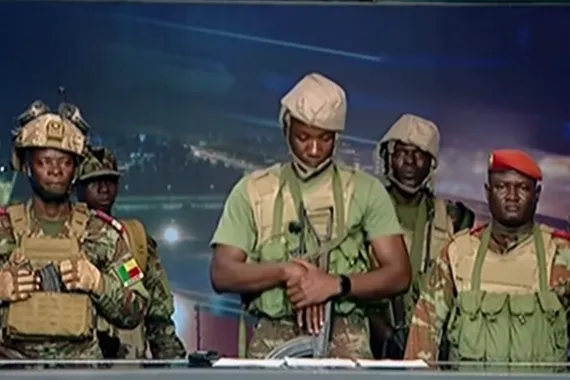
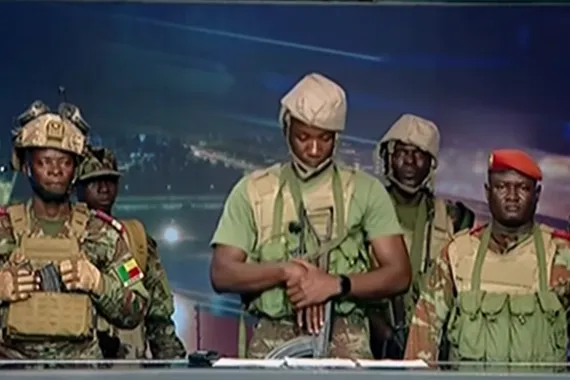
In January 2022, Burkina Faso’s armed forces, led by Lieutenant-Colonel Paul-Henri Sandaogo Damiba, overthrew President Roch Marc Christian Kaboré, citing the government’s failure to equip the military and curb worsening insurgency. Eight months later, Captain Ibrahim Traoré led a second coup, accusing Damiba of abandoning the transition’s core goals.
“Faced with the deteriorating situation, we tried several times to get Damiba to refocus the transition on the security question,” Traoré said in a signed statement.
“Damiba’s actions gradually convinced us that his ambitions were diverting from what we set out to do. We decided this day to remove Damiba,” the declaration continued.
Announcing the takeover, a soldier told state media: “We have decided to take our responsibilities, driven by a single ideal: the restoration of security and integrity of our territory.”
Niger joined the list in July 2023 when the Presidential Guard ousted President Mohamed Bazoum. General Abdourahamane Tiani defended the coup on grounds of insecurity and governance failures.
In Chad, the military dissolved the civilian government in April 2021 after President Idriss Déby Itno was killed fighting rebels. His son, Mahamat Idriss Déby, was installed as head of a Transitional Military Council, ruling for three years before claiming victory in a contested 2024 election. Opposition groups rejected the result, alleging widespread irregularities.
Guinea experienced a takeover in September 2021 when Colonel Mamady Doumbouya removed President Alpha Condé following his controversial third-term bid. Doumbouya suspended the constitution, closed borders and vowed to rebuild state institutions after what he called Condé’s “kleptocratic” rule.
Sudan’s October 2021 coup saw General Abdel Fattah al-Burhan depose the transitional government, arrest Prime Minister Abdalla Hamdok, and suspend the constitution. The military justified its actions by citing threats posed by investigations into past abuses and disputes over military-owned businesses.
Gabon’s August 2023 coup ended the 56-year Bongo dynasty shortly after Ali Bongo’s disputed re-election. Anger over corruption, unemployment, and mismanagement of oil wealth fuelled public support for the military intervention led by General Brice Clotaire Oligui Nguema.
In Madagascar, political unrest and mass protests against President Andry Rajoelina provided an opening for the military to intervene in October 2025, capitalising on grievances over poverty, corruption and youth unemployment.
Post-Coup Political Landscape
Mali:
Colonel Assimi Goïta’s 2020 and 2021 coups, which were framed as a necessary “refoundation” of the state, have instead deepened internal rifts and eroded democratic institutions. Elections slated for 2024 have been indefinitely postponed. A 2023 constitution has failed to deliver a return to civilian rule, and an April 2025 decree dissolved political parties while granting Goïta a renewable five-year term until at least 2030—without elections. Failed coup attempts, intensifying jihadist threats, and widespread protests have compounded the crisis.
Burkina Faso:
Captain Ibrahim Traoré’s 2022 takeover has not improved security. Militant killings are up 132%, government control has shrunk to 30% of national territory, and displacement continues to rise. Elections have been pushed to July 2029, and the electoral commission was dissolved in July 2025. The death penalty was reinstated in December for treason and terrorism. Despite claims of progress, repression, human-rights violations, and deepening isolation—including withdrawal from ECOWAS and the ICC—define the current trajectory.
Niger:
General Tiani’s junta, formed after Bazoum’s detention in July 2023, promised a three-year transition but has shown little intention of restoring democracy. Media freedom, civil society, and opposition activities have been severely restricted. Jihadist attacks continue, while sanctions and the pivot away from Western allies have strained the economy. Living conditions remain poor, with no election timetable in place.
Gabon:
By contrast, Gabon has made comparatively smoother progress. A new constitution approved in November 2024 introduced term limits and abolished the office of prime minister. After resigning from the military, Nguema won a 90% victory in the April 2025 presidential election. Legislative and local elections later that year were widely seen as credible despite minor irregularities. Economic reforms and anti-corruption efforts helped deliver 2.9% growth in 2024. Analysts now view Gabon as a tentative model of democratic transition in a region marked by entrenched military rule.