
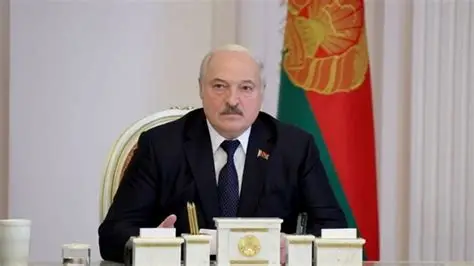
Belarusian president Alexander Lukashenko has released 123 prisoners, including Nobel peace prize laureate Ales Bialiatski and opposition leader Maria Kalesnikava, following the United States’ decision to lift sanctions on Belarusian potash exports.
The announcement came after two days of talks in Minsk with Donald Trump’s envoy, John Coale. It marks the largest prisoner release since diplomatic contacts between Washington and Lukashenko began.
Belarus, a close ally of Russia, has long been isolated from Europe and the wider West due to its human rights record and violent suppression of protests. US officials described the move as part of an effort to draw Lukashenko away from Moscow’s influence, though opposition figures remain sceptical.
Among those freed was Bialiatski, co-recipient of the 2022 Nobel peace prize, who was jailed in July 2021 after years of campaigning for political prisoners. Kalesnikava, one of three women who spearheaded mass protests in 2020, was also released, alongside Viktar Babaryka, detained while attempting to challenge Lukashenko in the presidential election that year.
Reports suggest many detainees suffered declining health during their imprisonment, with human rights groups alleging mistreatment. Kalesnikava’s sister, Tatsiana Khomich, said her sibling was “thankful to the USA and Trump for their efforts” in securing her freedom.
Relatives of the prisoners gathered outside the US embassy in Vilnius, Lithuania, where some of those released are expected to be taken. Ukrainian authorities confirmed that 114 civilians, including Belarusian and Ukrainian nationals, were transferred to Ukraine.
Coale told reporters that sanctions on potash would be lifted “as per the instructions of president Trump”. Sanctions were first imposed by the US and EU after the disputed 2020 election and intensified in 2022 when Belarus allowed Russian forces to use its territory for the invasion of Ukraine.
Opposition figures welcomed the release but urged the European Union to maintain its sanctions. Exiled leader Sviatlana Tsikhanouskaya said they were vital to “enabling democratic transition and ensuring accountability”.
Lukashenko has denied holding political prisoners, describing those detained as “bandits” and enemies of the state. The banned Belarusian human rights group Viasna insists that 1,227 political prisoners remain behind bars.
Belarusian state media quoted Coale as saying Lukashenko could play a role in negotiations with Vladimir Putin. “Your president has a long history with president Putin and has the ability to advise him,” Coale said. “They are longtime friends and have the necessary level of relationship to discuss such issues.”
The Trump administration has been pursuing mediation between Russia and Ukraine in an attempt to bring the war to an end.